Author: Julie
-
Assistant Professor – Mental Health and Well-Being Psychology, University of Toronto, St. George Campus
POSITION DESCRIPTION The Department of Psychology in the Faculty of Arts and Science at the University of Toronto invites applications for a full-time tenure stream position in the area of Mental Health and Well-Being Psychology. The appointment will be at the rank of Assistant Professor with an anticipated start date of July 1, 2027. This
-
Read CAN Connection – Fall 2026
We invite you to read our latest newsletter: CAN Connection – Fall 2026 Message from the President, Alyson Fournier Advocacy CAN Meeting Updates Opportunities Upcoming EventsConnect with CAN at SfN Renew your membership or become a member today!
-

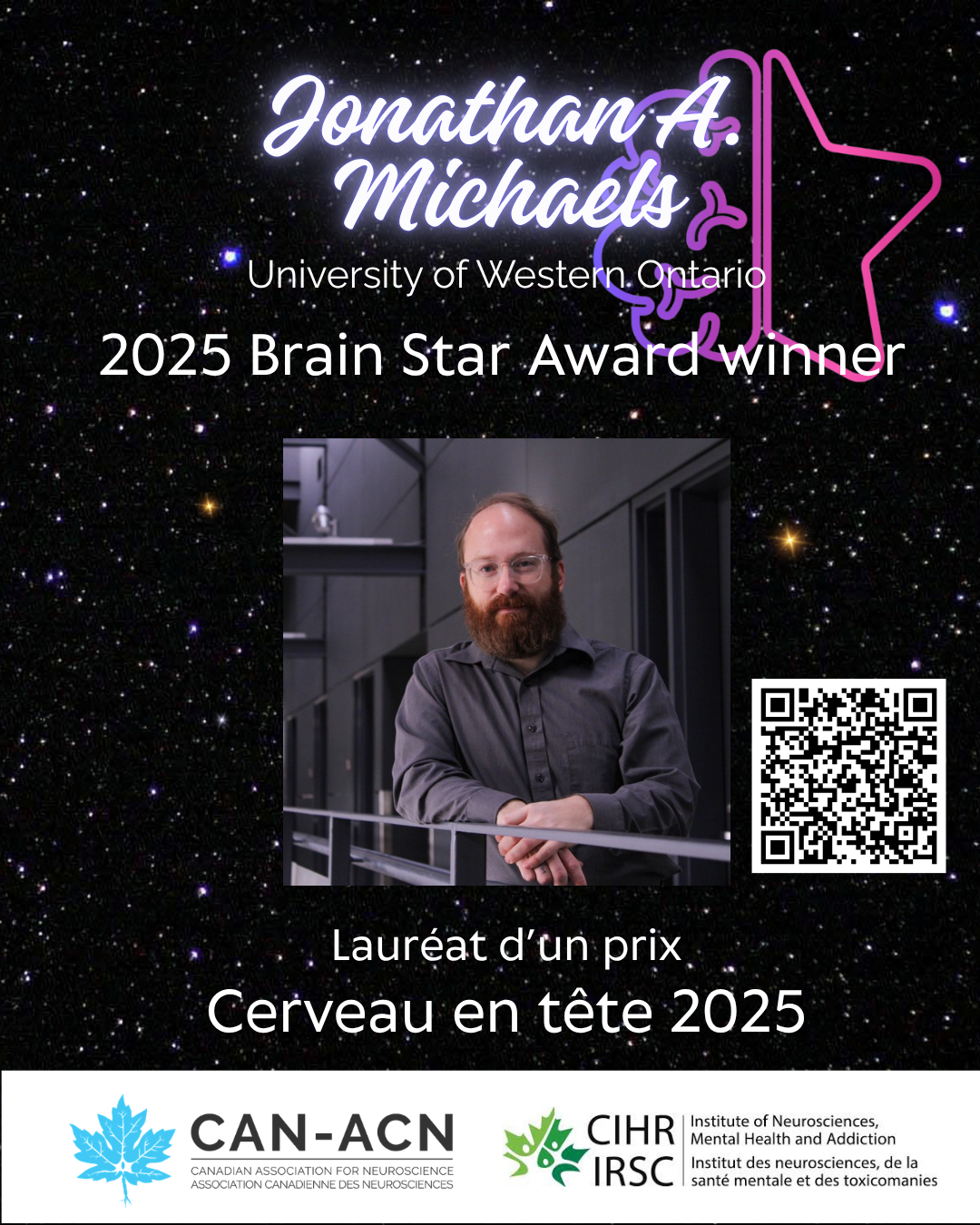
Brain Star Award winner feature: Jonathan A. Michaels, University of Western Ontario
Research reveals how the brain anticipates the unexpected to keep our movements smooth and accurate Walking through a packed crowd, you do more than plan your own steps – your brain is also preparing for the people who might bump into you. New research led by Jonathan A. Michaels, conducted in the laboratory of Andrew
-
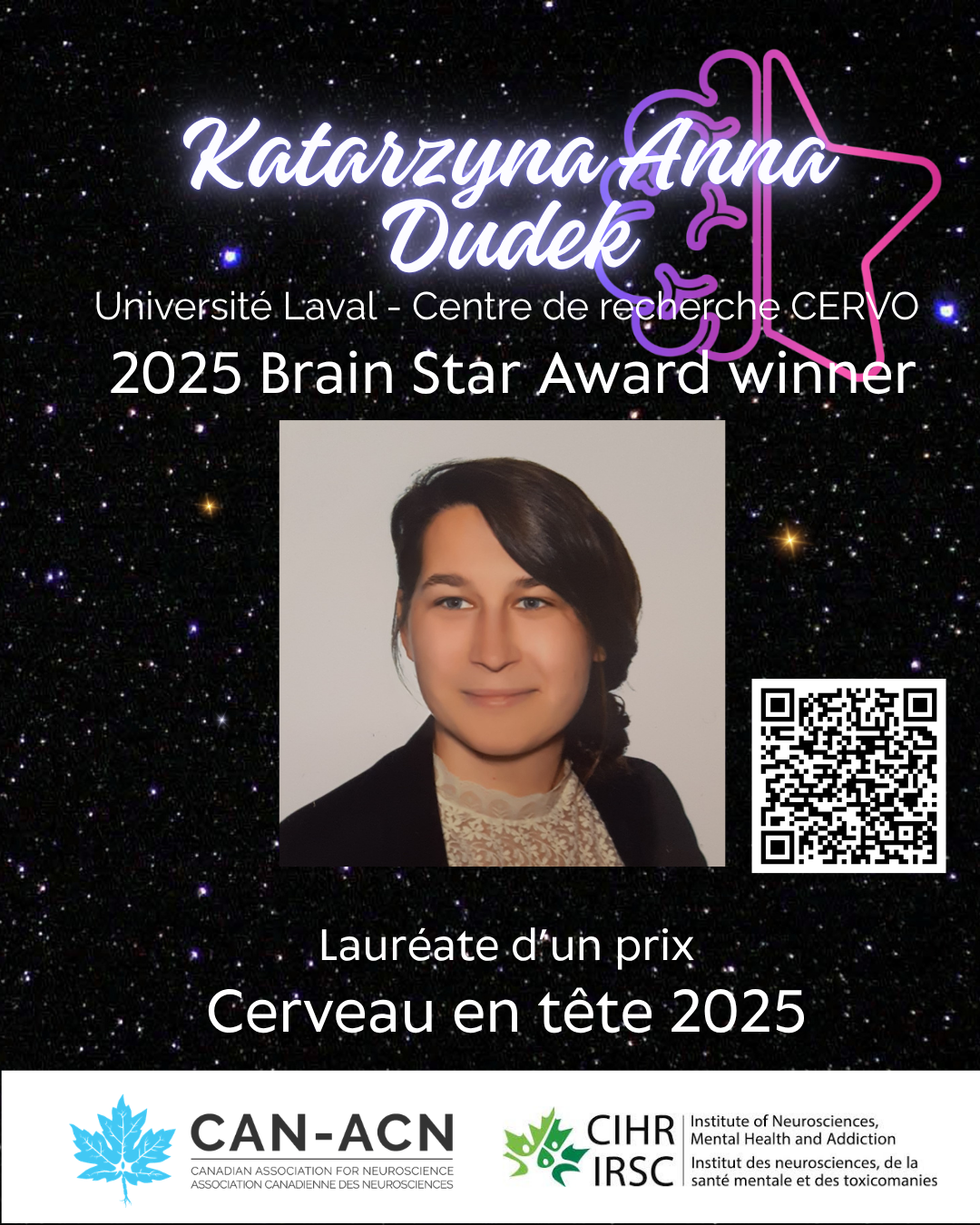
Brain Star Award winner feature: Katarzyna Anna Dudek, Université Laval
Identification of a cannabinoid receptor as target to promote resilience in major depressive disorders One out of every five people will suffer from major depressive disorder (MDD) in their lifetime, and about 30-50% of individuals with depression are unresponsive to commonly prescribed antidepressant treatments, suggesting that biological mechanisms remain untreated. Recent evidence suggests that the
-
Postdoctoral Researcher in Proteostasis and Alzheimer’s disease and Tauopathies – University of Toronto
The Yu lab at the University of Toronto is seeking a motivated postdoctoral researcher to immediately join a collaborative project investigating proteostasis and impact of risk factors like sleep or vascular impairment in neurodegenerative diseases like Alzheimer’s and other tauopathies. The researcher must have experience in neurosciences (specifically understanding of neural networks, neuroanatomy, EEG/ephys) systems
-
Building Canada’s Future Through Research Investment
Scientific research is Canada’s most strategic investment – Now is the time to build a thriving sovereign research and innovation ecosystem in Canada Canada has announced the first 64 Canada Impact+ Research Chairs, now the Eddie Goldenberg Research Chairs of Canada. This is welcome news. The initiative is bold and timely. Canada should compete for
-
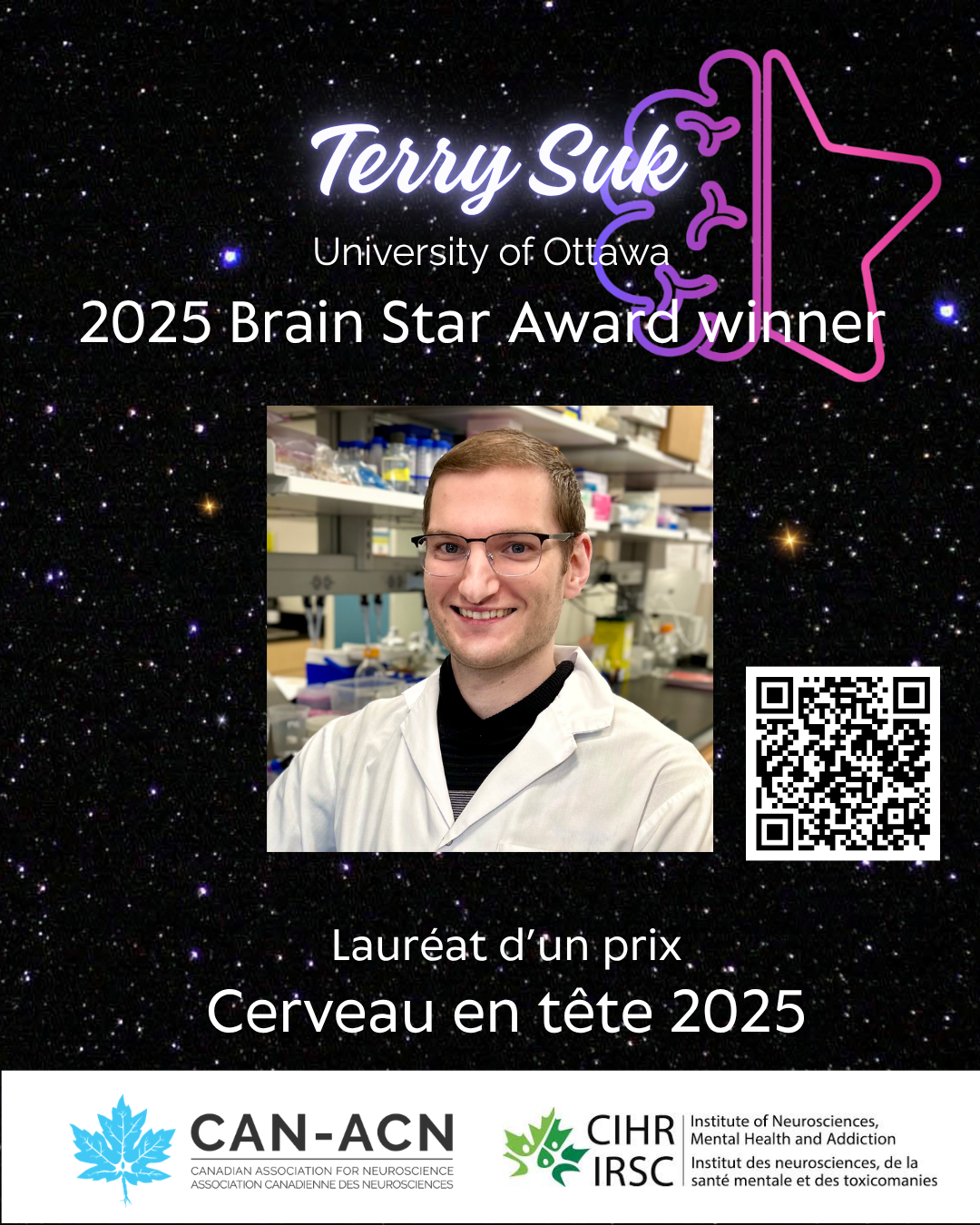
Brain Star Award winner feature: Terry Suk, University of Ottawa
Stress-dependent modification of a protein called TDP-43 helps neurons recover once the stress has passed Many neurodegenerative diseases, including Amyotrophic Lateral Sclerosis (ALS) and Frontotemporal Dementia (FTD), are linked to improper function of a protein called TDP-43. Under healthy conditions, TDP-43 is found inside the nucleus of neurons, where it plays critical roles in maintaining
-
The Hilary and Galen Weston Foundation seeks a Program Manager, Neuroscience
POSITION: Program Manager, Neuroscience LOCATION: Toronto, Ontario POSITION DETAILS: Full Time, Permanent REPORTS TO: Director, Neuroscience WEBSITE: https://hgwf.org/ THE ORGANIZATION The Hilary and Galen Weston Foundation (HWGF) empowers passionate leaders to build thriving communities and regenerate ecosystems, by nurturing innovation and scaling proven solutions to deliver transformative change. The HGWF supports a range of
-
Featured Brain Star Award winner: Sameera Zia, University of Alberta
New therapeutic targets for Multiple Sclerosis identified by studying the role of microglia in myelin repair Multiple sclerosis (MS) is a neurological disease that affects over 100,000 Canadians and is the leading cause of neurological disability amongst people ages 20-40 years. It is a chronic, autoimmune disease where the immune system attacks the protective myelin
-
Read CAN’s submission to the 2026 pre-budget consultations
Pre-Budget consultations are an opportunity for Canadians from across the country to share their ideas and priorities on how to shape Canada’s future. Please view below CAN’s formal submission to these consultations, which are open until September 8, 2026. You can read about the consultations and participate here: https://www.canada.ca/en/department-finance/programs/consultations/2026/pre-budget-consultations-2026.html In this brief, CAN recommends that