
Message from the President, Alyson Fournier
Dear members and colleagues
The year 2027 will mark the 20th edition of the Canadian Neuroscience Meeting. When Jonathan Dostrovski and Brian MacVicar, respectively chair of the organizing and of the scientific program committee, organized the first meeting in Toronto back in 2007, they laid the foundation for an event that brings our community together every year, and allows us to welcome new members. We are excited to be hosting the meeting in Calgary for the first time, June 6-9, 2027. Please mark you calendars and join us for this celebration!

This anniversary is also a great time to reflect on our accomplishments as a community and the challenges ahead, and how we can work together to make our voice stronger.
Advocacy has become one of CAN’s major projects over the past years, and I am happy to be working with the CAN advocacy team to develop new targets for engagement. Our main objective remains to promote and encourage further investments in the three main funding agencies, CIHR, NSERC and SSHRC. In addition to reaching out to the departments of Finance and Health, CAN has expanded it’s reach to other governmental agencies across key portfolios including Health, Industry, Science, and Veterans Affairs.
We also aim to launch three new initiatives this fall. The first is a story telling initiative to highlight some of the research successes from our community. The second aims to expand the reach our advocacy activities across Canada by recruiting more participants for our advocacy activities. Finally, we will also be reaching out to other scientific societies, foundations and patient groups with the objective to build a coalition in support of increased funding for tri-agency.
A new academic year also means a new membership year for CAN, so I invite you to renew your membership to support all our activities. We are also seeking new members for our advocacy, nominations, EDI and Meeting program committees, so please consider serving in one of these committees. Information on how to be a candidate can be found in this newsletter.
Finally, if you are attending the SfN meeting in Washington, I invite you to engage with us by visiting the CAN booth, and make sure you attend the CAN social, which will take place Tuesday November 17th – See details below.
Thank you for taking the time to read our newsletter, and stay in touch!
Alyson Fournier,
President of the Canadian Association for Neuroscience
Advocacy
Read CAN’s latest submission to the 2026 pre-budget consultations

In this brief, CAN recommends that the Government of Canada implement a five-year plan to increase the base budgets of Canada’s three federal granting councils, the Canadian Institutes of Health Research (CIHR), the Natural Sciences and Engineering Research Council (NSERC), and the Social Sciences and Humanities Research Council (SSHRC), by a minimum of 10% annually.
Building Canada’s Future Through Research Investment
Read our opinion piece here: https://can-acn.org/building-canadas-future-through-research-investment/
Talent attraction and talent retention are not competing priorities. They are two parts of the same strategy, which is to build a thriving sovereign research and innovation ecosystem in Canada.
Apply for a CAN trainee outreach/advocacy award today
Do you have a great project or initiative to promote neuroscience research in Canada? We can provide support. Applications are accepted at all times, and reviewed every three months (March 1, June 1, September 1, and December 1). Awards will be given based on adherence to award criteria and be contingent on budget availability.
Advocacy reports
You can read more about CAN’s advocacy activities in our latest advocacy reports, available here: https://can-acn.org/advocacy-reports/
CAN Meeting Updates
Save the dates!
We are excited to announce the 20th edition of the Canadian Neuroscience Meeting – Join us for this celebration!

20th Canadian Neuroscience Meeting
June 6-9, 2027
Calgary Telus Convention Centre
The Canadian Neuroscience meeting is a great opportunity to present your work, learn about new cutting-edge research and network with neuroscience leaders from Canada and abroad.
Meeting Chair: Mark Cembrowski, University of British Columbia
Meeting Co-Chair: Caroline Ménard, Université Laval
Chair of the local organizing committee: Deborah M. Kurrasch, University of Calgary
Plenary Speakers
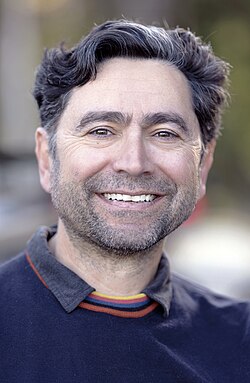
Presidential lecture:
Ardem Patapoutian
Investigator, Howard Hughes Medical Institute; Presidential Endowed Chair in Neurobiology
The Patapoutian Lab’s research at Scripps Research focuses on identifying and characterizing ion channels and other sensors that translate mechanical stimuli to chemical signals. These sensors are the basis of how we sense touch, pain, sound, and blood flow.
Keynote speaker:
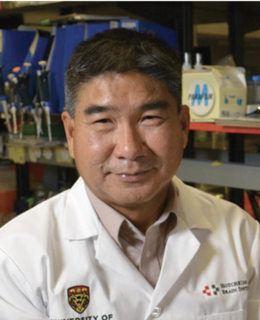
Voon Wee Yong
Full Professor, Cumming School of Medicine, Department of Clinical Neurosciences, University of Calgary
Full Member, Hotchkiss Brain Institute
Dr. Yong’s research interests lie in the area of neuroimmunology, neuroprotection and CNS regeneration, and his projects are guided by MS and brain tumors. Dr. Yong has published 280 peer-reviewed manuscripts and his research has been translated into Phase III clinical trials in MS, spinal cord injury and glioblastoma.
Plenary speaker:
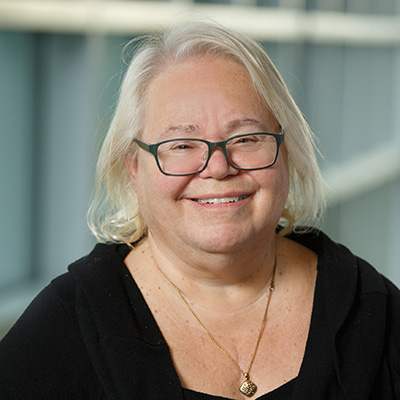
Eve Marder
University Professor, Brandeis University
Victor and Gwendolyn Beinfield Professor of Biology
Member, U.S. National Academy of Sciences
One of the fundamental problems in neuroscience is understanding how circuit function arises from the intrinsic properties of individual neurons and their synaptic connections. Of particular interest to the Marder lab is the extent to which similar circuit outputs can be generated by multiple mechanisms, both in different individual animals, or in the same animal over its life-time.
Jennifer Lippincott-Schwartz
Senior Group Leader | Janelia Research Campus
Dr. Jennifer Lippincott-Schwartz investigates subcellular organization and organelle interactions using fluorescence and super-resolution microscopy. Her research explores functions like cell motility, cell communication, and how neuronal mechanics support brain development, computation, and healing, under normal and disease conditions.

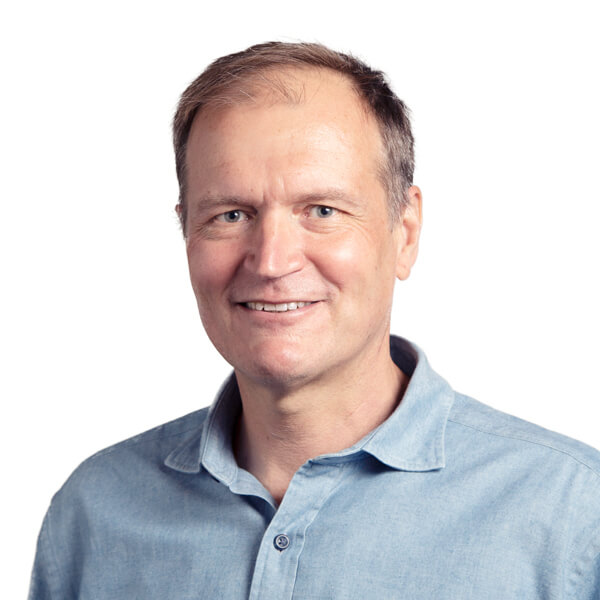
Karel Svoboda
Vice President and Executive Director of the Allen Institute for Neural Dynamics
Karel Svoboda’s work is at the intersection of neuronal biophysics and cognition. His goal is to identify core principles underlying information processing in mammalian neural circuits at the level of the whole brain. He has developed several widely-used methods to interrogate neural structure and function in intact brains.
Key Dates
Mark your calendars for these important dates for the 2027 CAN meeting
| Begins | Ends | |
|---|---|---|
| Call for parallel symposia | November 4, 2026 | December 8, 2026 |
| Call for satellite meetings | November 4, 2026 | December 8, 2026 |
| Call for poster presentations | November 12, 2026 | February 2, 2027 |
| Call for application – Meeting Professional development & Travel awards | November 12, 2026 | February 2, 2027 |
| Call for New Investigator Award nominations | November 24, 2026 | January 25, 2027 |
| Meeting registration (early-bird rate) | January 15, 2026 | March 30, 2027 |
| Meeting registration (regular rate) | March 31, 2027 | May 7, 2027 |
| Meeting registration (late, on-site) | May 8, 2027 | June 9, 2027 |
Opportunities
Join a CAN committee
Get involved !
Get involved in the Canadian Association for Neuroscience by joining one of our committees!
Learn more about our committees
Please apply using the online forms available here:
Application deadline is October 15, 2026
Neurojobs
View recent advertisements from our website, with posting date
- 2026-09-22 Assistant Professor – Mental Health and Well-Being Psychology, University of Toronto, St. George Campus
- 2026-09-11 Postdoctoral Researcher in Proteostasis and Alzheimer’s disease and Tauopathies – University of Toronto
- 2026-09-08 The Hilary and Galen Weston Foundation seeks a Program Manager, Neuroscience
- 2026-08-28 Assistant or Associate Professor, Department of Human Anatomy & Cell Science – University of Manitoba
- 2026-08-24 Industry/University Post-Doctoral Position in Neurogenomics – McGill University
- 2026-08-24 Graduate Student Position in Neuroimmunology, Alzheimer’s Disease, and Microglial Biology – University of Alberta
- 2026-08-10 Postdoctoral Fellow in Hippocampal Circuit Mechanisms of Memory
- 2026-07-20 Postdoctoral Fellow: Video Representation Learning & Behavioural AI – Douglas Research Centre, McGill University
- 2026-07-14 Funded postdoctoral position in non-human primate electrophysiology in the Michaels Lab
- 2026-06-12 Associate Professor / Professor – Krembil Chair in Neuroscience and Mental Health
- 2026-06-10 Tenure-Track Assistant Professor in Neuroethology – McMaster University
- 2026-06-01 Waverley House Accelerator for Mental Illness and Addiction Research – Now Recruiting Five Early-Career Mental Health Research Leaders
View the neurojobs webpage here: https://can-acn.org/neurojobs/
CAN members can submit advertisements for free
Upcoming Events
October
1
2026
November
5
2026
November
14
2026
December
3
2026
June
6
2027
Connect with CAN at SfN
CAN booth at SfN
Come meet the CAN team at Booth #2500 in the Institutes and nonprofits area of the exhibit hall at Neuroscience 2026, taking place November 14 – 18, 2026 at Walter E. Washington Convention Center in Washington, D.C..

CAN Social at SfN
Join us for the CAN Social at SfN!
Where: Allegory DC – 1201 K St NW #1, Washington, DC 20005
When: Tuesday November 17, 2026, starting at 6:30PM
Renew your membership or become a member today!
If you have not already done so, we invite you to renew your annual membership or become a member of the Canadian Association for Neuroscience, for the 2026-2027 membership year. Your membership helps support our activities which aim to promote neuroscience research and advocate for increased funding for research in Canada.
CAN continuously strives for the betterment of the Canadian Neuroscience community by:
- Advocating for increased funding for basic research in Canada (https://can-acn.org/advocacy/) and supporting grass-roots advocacy initiatives
- Promoting Canadian neuroscientists and neuroscience research, through awards, our website and social media
- Strengthening the Canadian neuroscience community by providing opportunities to connect and network
- Supporting Equity, Diversity and Inclusion in Neuroscience in Canada, through the efforts of the CAN-EDI committee, and by supporting grass-roots actions proposed by neuroscientists (https://can-acn.org/equity-diversity-and-inclusivity-in-neuroscience/)
- Developing partnerships to help us achieve our goals – Examples include a Memorandum of Understanding with the Society for Neuroscience, which provides significant funds for advocacy in Canada; with CIHR-INMHA to manage the Brain Star awards; with IBRO and BrightFocus to support participation of underrepresented groups in the CAN meeting through Travel award attribution.
Your membership helps support these initiatives and many more. To learn more about us and the benefits of being a CAN member, please visit: https://can-acn.org/become-a-member/
CAN membership is open to all scientists, principal investigators and students actively involved in neuroscience research from across Canada and around the world. CAN membership dues are paid annually and cover the calendar year from September 1st to August 31st.
We hope we can count on your participation and support this year!