
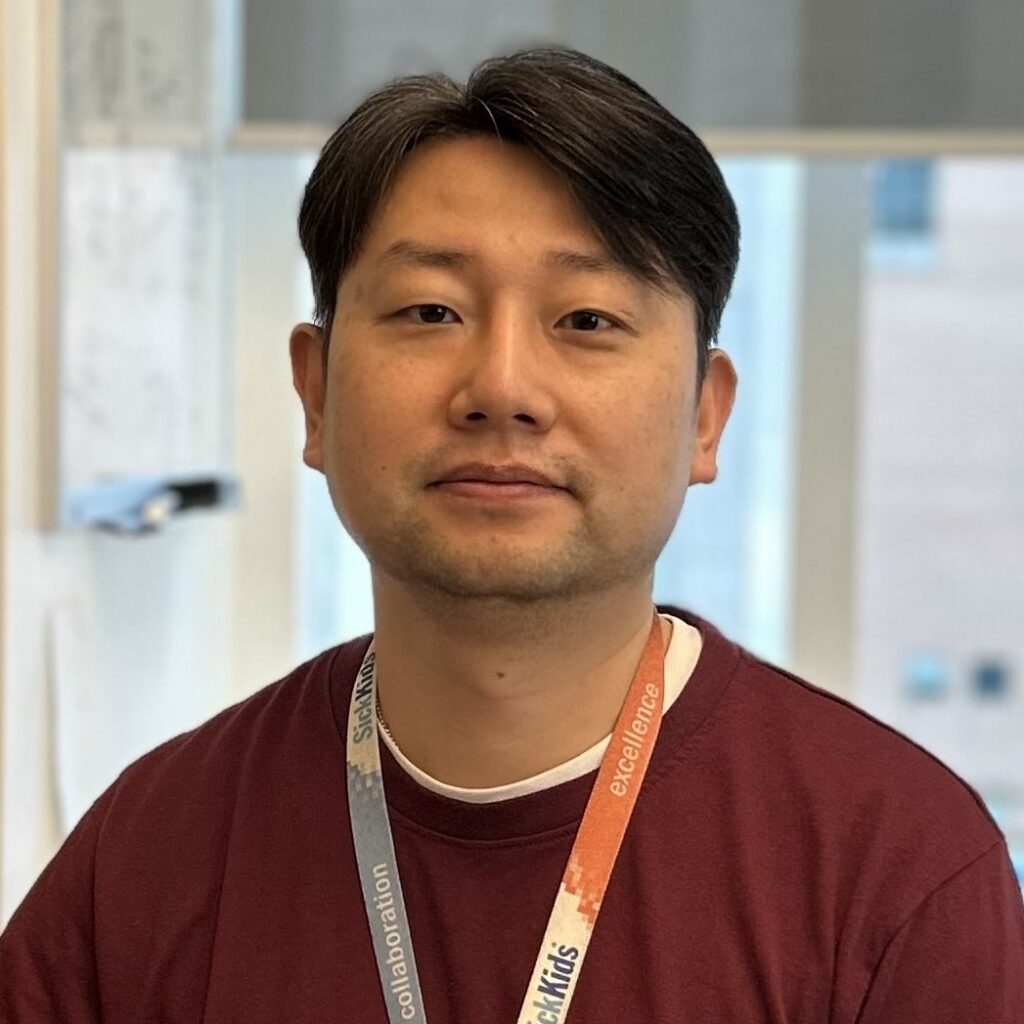
Sung Mo Park
Work done at The hospital for sick children
Article citation
Sungmo Park, Joseph Lee, Asim J. Rashid, Chen Yan, Valentina Mercaldo, Alexander D. Jacob, Jung Hoon Jung, Paul W. Frankland, Sheena A. Josselyn. Molecular mechanisms mediating engram ensemble retrievability state in mice. Neuron (2026) 114, 1–16
Failed memory recall does not necessarily reflect information loss
A publication by SungMo Park, working in the Josselyn/Franklin lab at the Hospital for Sick Children, fundamentally reframes how memory impairment is understood by demonstrating that failed recall does not necessarily reflect irreversible information loss. Instead, they show that memories can persist as “silent engrams”—physically encoded neuronal ensembles encoding the memory, but that are rendered inaccessible by disrupted connections. This conceptual shift challenges dominant models of memory failure and introduces engram accessibility as a central, regulated dimension of memory function.
This study identifies a molecular mechanism that regulates memory accessibility by controlling transitions between retrievable (latent) and inaccessible (silent) engram states. Using a mouse model of Alzheimer’s disease, the researchers show that memory retrieval failure can occur despite intact memory encoding, revealing that these deficits arise from engram silencing rather than memory erasure. In this silent state, memories persist physically within engram ensembles but cannot be accessed by natural sensory cues.
The researchers demonstrate that excessive removal of a class of brain receptors called GluA2-containing AMPA receptors weakens connections in engram neurons, driving the transition to a silent engram state. Critically, they show that silenced engrams can be persistently “un-silenced” by blocking GluA2 removal with a molecule called peptide TAT-GluA2₃Y, but only when this intervention coincides with high engram activity—during memory consolidation, a retrieval attempt, or optogenetic reactivation. This activity-dependent requirement ensures that un-silencing is selective to relevant memory traces rather than globally enhancing memory.
Furthermore, the researchers extended these findings to healthy mice by artificially inducing engram silencing by optogenetic stimulation and subsequently reversing this silencing through GluA2 stabilization. Using advanced cell imaging techniques, they could directly link behavioral memory recovery to restored GluA2 in engram neurons.
Together, these results establish synaptic GluA2 trafficking as a molecular switch governing engram retrievability, providing a unified framework for understanding memory accessibility failures and suggesting a biologically grounded strategy for restoring otherwise inaccessible memories in neurodegenerative disease.
These findings suggest that therapeutic strategies for cognitive disorders need not focus exclusively on preventing neurodegeneration. Instead, targeting synaptic receptor trafficking during defined windows of engram reactivation offers a biologically grounded strategy for restoring cognitive function in Alzheimer’s disease, traumatic brain injury, and age-related memory decline.
About Sung Mo Park
Sung Mo Park is a neuroscientist studying how memories are formed, stored, and accessed in the brain. He conducted this research as a postdoctoral fellow at The Hospital for Sick Children (SickKids) in Toronto, working in the laboratories of Dr. Sheena Josselyn and Dr. Paul Frankland. His work focuses on understanding why some memories become difficult to retrieve, particularly in neurological conditions such as Alzheimer’s disease.
During his PhD, he specialized in electrophysiology and investigated how synaptic plasticity in the lateral amygdala supports fear learning and extinction. Building on this foundation, his current research explores how memory is stored and accessed at the level of “engram neurons”—the specific groups of brain cells that encode memories. By combining behavioral experiments, neural circuit manipulation, and molecular approaches, he aims to uncover the biological mechanisms that control memory accessibility and identify ways to restore lost cognitive function.
Sources of funding
This work was supported by grants from the Basic Science Research Program through the National Research Foundation (NRF) of Korea funded by the Korea Government (MSIT) (RS-2024-00338184) to Jung Hoon Jung; NIMH (R01 MH119421-01) and Brain Canada Foundation to Sheena A. Josselyn and Paul W. Frankland; CIHR (FDN – 159919) to Sheena A. Josselyn; CIHR (PJT180530) to Paul W. Frankland; and The Stratas Foundation to Sung Mo Park.