
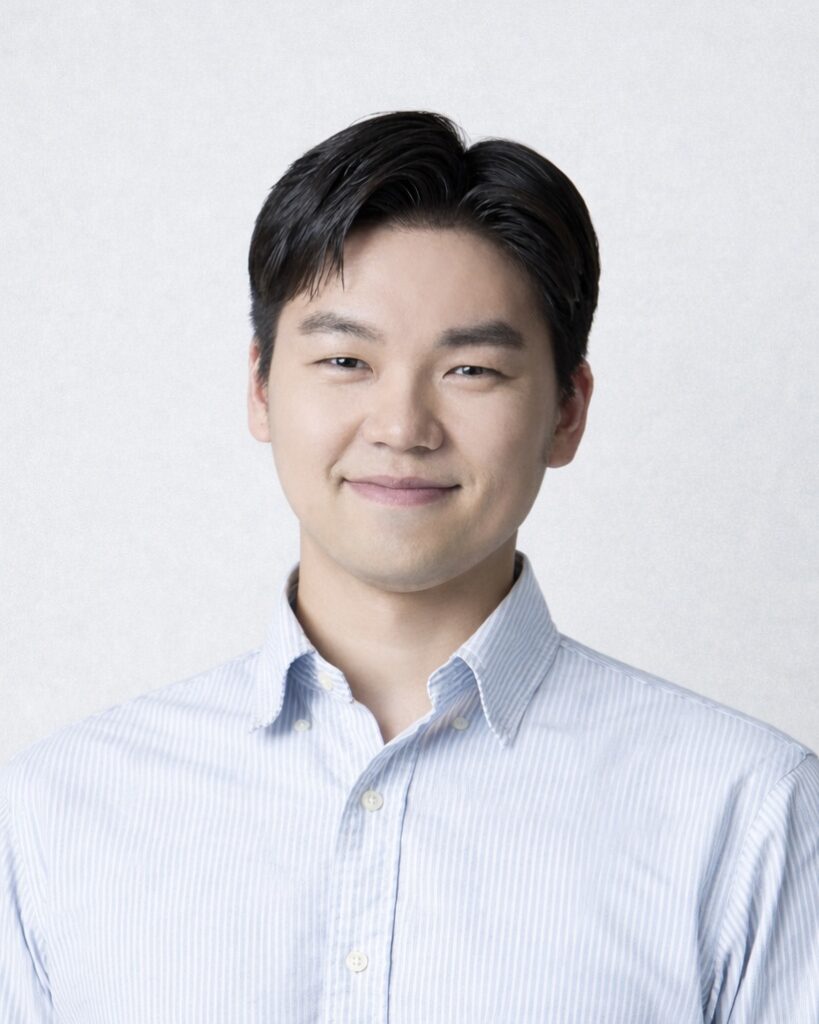
Dr. Sangyoon Ko
Work done at The Hospital for Sick Children
Article citation
Sangyoon Y. Ko, Yiming Rong, Adam I. Ramsaran, Xiaoyu Chen, Asim J. Rashid, Andrew Mocle, Jagroop Dhaliwal, Ankit Awasthi, Axel Guskjolen, Sheena A. Josselyn, Paul W. Frankland (2025). Systems consolidation reorganizes hippocampal engram circuitry. Nature, 643(8072), 735-743.
New research reveals that memories continue to evolve in the brain
Memory consolidation is the process through which initially fragile memories are transformed into long-term, more stable forms of memory. For decades, neuroscience textbooks have described this process as a gradual transfer of memories from the hippocampus—where memories are first encoded—to the neocortex for permanent storage. Findings by Dr. Sangyoon Ko and colleagues in the Josselyn-Frankland laboratory at The Hospital for Sick Children (SickKids) in Toronto now reveal a far more dynamic process.
The study demonstrates that memories stored within the hippocampus are not static after learning. Instead, the neural circuits that encode memories—known as memory engram circuits—undergo progressive structural and functional reorganization over time. Newly generated neurons in the adult hippocampus gradually become integrated into pre-existing memory circuits, reshaping communication between hippocampal pathways as memories mature.
As this reorganization unfolds, memories gradually transition from detailed, episodic-like representations toward more generalized and flexible forms that can guide behavior across related experiences. In this view, the hippocampus does not simply hand memories off to the cortex and disengage. Rather, it continues to actively refine and evolve memory representations long after an experience occurs, allowing past experiences to be transformed into adaptive knowledge about the world.
Together, these findings revise the canonical model of systems consolidation by showing that long-term memory persistence is supported by active and dynamic engram circuit reorganization across hippocampal networks, rather than by a simple transfer or passive decay of memory representations. More broadly, this work suggests that the brain continuously reshapes stored experiences to balance memory stability with the flexibility needed to adapt to an ever-changing environment.
Beyond its conceptual significance, the study establishes a powerful experimental platform for tracking, manipulating, and functionally dissecting memory engram circuits across extended timescales. This approach opens new opportunities to investigate how experiences reshape brain networks, how pathological states disrupt memory circuits, and how targeted interventions might restore them in neurological and psychiatric disorders.
About Sangyoon Ko
Dr. Sangyoon Ko performed this research during his PhD and postdoctoral training in the laboratory of Dr. Paul Frankland at The Hospital for Sick Children (SickKids), affiliated with the University of Toronto. As first author of the study, he led the conceptual development of the project, designed and performed all experiments, analyzed the data, wrote the manuscript, and supervised trainee researchers contributing to the study.
In addition to his training in systems neuroscience, Dr. Ko received research training in human genetics in the laboratory of Dr. Stephen Scherer at SickKids. He is now an Assistant Professor in the Department of Brain and Cognitive Sciences at the Korea Advanced Institute of Science and Technology (KAIST), where his laboratory investigates how memory engram circuits support cognition and how their dysfunction contributes to neurodevelopmental and neurodegenerative disorders.
Sources of funding
This work was funded by the National Institutes of Health, Brain Canada, the Canadian Institutes of Health Research, MOGAM Science Scholarship program and SickKids Restracomp Postdoctoral Fellowship program.