
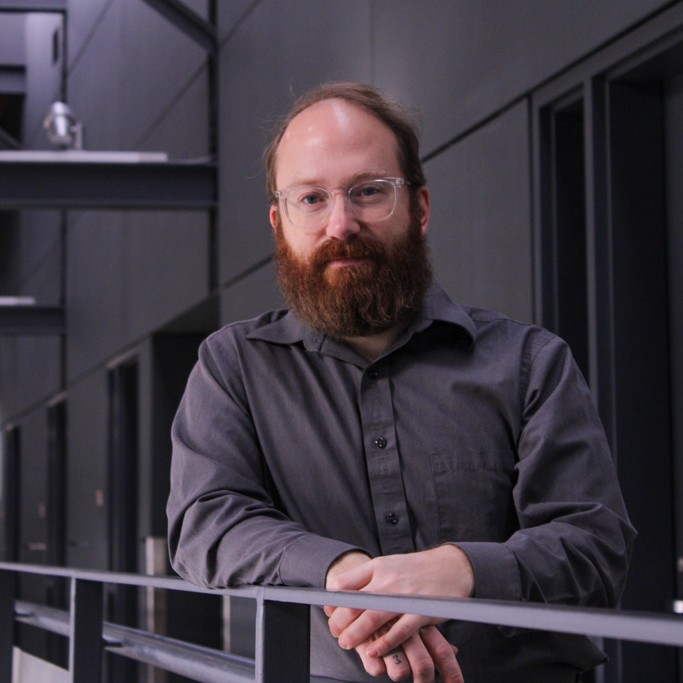
Dr. Jonathan A. Michaels
Work done at University of Western Ontario
Article citation
Michaels JA, Kashefi M, Zheng J, Codol O, Weiler J, Kersten R, Lau JC, Gribble PL, Diedrichsen J, Pruszynski JA (2025) Sensory expectations shape neural population dynamics in motor circuits. Nature:1–10.
Research reveals how the brain anticipates the unexpected to keep our movements smooth and accurate
Walking through a packed crowd, you do more than plan your own steps – your brain is also preparing for the people who might bump into you. New research led by Jonathan A. Michaels, conducted in the laboratory of Andrew Pruszynski at Western University, reveals how the brain pulls off this kind of constant balancing act. The motor circuits that control our movements do not passively wait for something to go wrong; they actively configure themselves in advance so they can react quickly and accurately when a disturbance does occur.
To study this, the team used a robotic device called the KINARM exoskeleton to gently push participants’ arms in different directions. Visual cues told participants how likely each direction of push was on any given trial. Both humans and monkeys naturally adjusted their movements based on these probabilities, and their muscles responded faster and more efficiently when the actual push matched what their brain had expected.
To uncover the underlying brain activity, the researchers used Neuropixels – a cutting-edge probe, now also being used in human patients, that can record from thousands of neurons at once. They found that expectations about an upcoming disturbance are represented across the brain’s motor circuits as simple, organised patterns of neural activity that directly mirror how likely each event is. When a push actually arrived, a rapid general-purpose “something happened” signal kicked the motor system into action, allowing it to start responding before the precise direction of the push had even been resolved. Computer models of the arm, trained under similar conditions, learned the same predictive strategy on their own – confirming that this is an efficient way for the brain to control movement.
The implications reach well beyond the lab. By identifying expectation as a core ingredient of stable movement, this work points to new directions for stroke and injury rehabilitation – where the goal could be to help patients restore the brain’s predictive setup, not just muscle strength. The same principles could also improve next-generation brain-computer interfaces – like those being developed by Neuralink, Synchron and others, which are themselves built on decades of fundamental neuroscience research – by helping these devices better anticipate what users intend to do and adapt to surprises in the environment. To accelerate further discovery, the researchers have also made their entire neural dataset openly available to the scientific community – one of the most thorough datasets of its kind for studying how the brain controls movement.
About Dr. Jonathan A. Michaels
Dr. Jonathan A. Michaels is an Assistant Professor in the School of Kinesiology and Health Science at York University, where his lab studies how the brain controls movement. His research combines large-scale neural recordings, behavioural experiments and artificial neural network modelling to understand how the brain plans, executes and corrects skilled actions – with the long-term goal of informing rehabilitation strategies and the next generation of brain-computer interfaces. He completed his PhD with Hansjörg Scherberger at the German Primate Center / University of Göttingen, an HFSP Postdoctoral Fellowship with Krishna Shenoy at Stanford University, and Banting and BrainsCAN Postdoctoral Fellowships with Andrew Pruszynski at Western University before joining York in 2024.
Sources of funding
This research was funded by Canadian Institutes of Health Research (CIHR) Operating Grants (Foundation Grant 353197 to J.A. Pruszynski; Project Grant PJT-175010 to J.A. Pruszynski and J. Diedrichsen), the Simons Foundation (via the Simons-Emory International Consortium on Motor Control), and the Azrieli Foundation (via the Collaboration on Motor Planning, Execution and Resilience). Jonathan A. Michaels was supported by a Banting Postdoctoral Fellowship, a BrainsCAN Postdoctoral Fellowship (Canada First Research Excellence Fund), and a Vector Institute Postgraduate Affiliation. J.A. Pruszynski was supported by the Canada Research Chairs programme.