
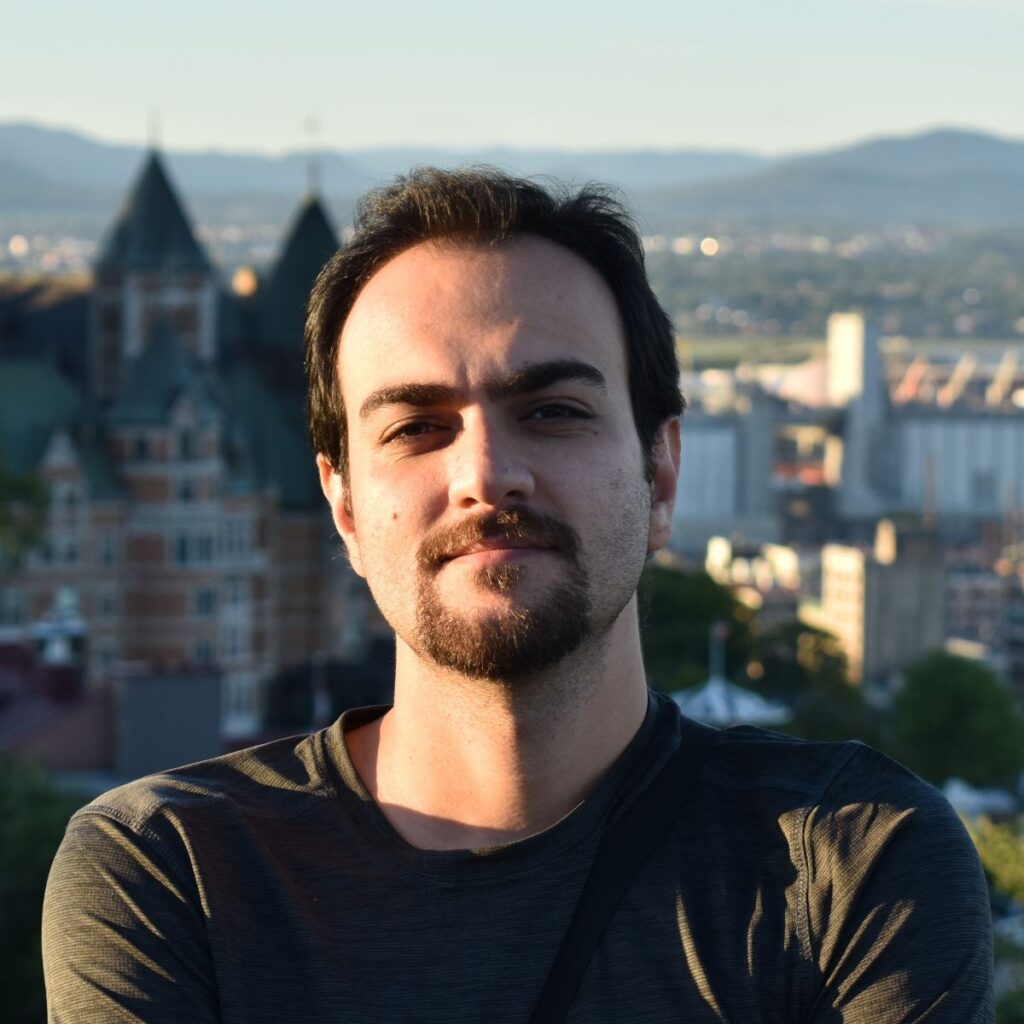
Ali Golbabaei
Work done at The Hospital for Sick Children and University of Toronto
Article citation
Golbabaei, A., Josselyn, S. A., & Frankland, P. W. (2025). PV-dependent reorganization of prelimbic cortex sub-engrams during systems consolidation. Neuron vol 114 (issue 1) pp 142-158
Memory encoding evolves over time, involving different subregions of the brain
Memories for specific events can persist for weeks or months, but the neural mechanisms supporting their storage and retrieval change over time. In this study, Ali Golbabaei, working in the Josselyn-Frankland lab at SickKids Hospital, examined this reorganization within memory-representing neuronal populations (engrams) in the prelimbic cortex, a key subregion of the medial prefrontal cortex (mPFC). The mPFC brain region is implicated in the consolidation of recent and remote memories in rodents. This work provides a major conceptual advance in the understanding of consolidation by revealing how memories are reorganized within cortical circuits over time, and how cells called parvalbumin interneurons play key roles in driving this reorganization.
Rather than treating cortical engrams as uniform entities, the researchers introduce the idea that memories are distributed across multiple projection-defined sub-engrams whose contributions evolve with memory age. This refines classical models of consolidation by adding circuit-level specificity to how and where memories are expressed.
The identification of parvalbumin interneurons as a key mechanism driving sub-engram reorganization has broad implications. PV interneurons are implicated in neurodevelopmental and psychiatric disorders, including schizophrenia, autism, and PTSD (post-traumatic stress disorder)—conditions often marked by abnormal memory persistence or generalization. By linking PV interneuron activity to the selective stabilization of remote memories, this work suggests new circuit-based targets for therapeutic intervention.
More broadly, the findings help explain why remote memories rely on broader, more integrated brain networks than recent ones. This insight bridges cellular neuroscience and cognitive theory, advancing our understanding of how the brain balances memory stability with flexibility across the lifespan.
About Ali Golbabaei
Ali Golbabaei conducted this research as a PhD student under the supervision of Dr. Paul Frankland at the Hospital for Sick Children, University of Toronto. As first author, he contributed to shaping the research questions and study design, with guidance from his supervisor and collaborators. He carried out the experiments and was responsible for data collection and analysis, and contributed to interpreting the findings. He also helped write the manuscript and prepare the figures.
Ali’s research is driven by an interest in understanding how memory and learning are supported by neural circuits in the brain. His work focuses on circuit-level mechanisms underlying memory, and he has experience with a range of approaches including behavioral assays, optogenetics, and molecular biology.
Sources of funding
This work was funded by grants from the National Institutes of Health, Brain Canada, and the Canadian Institutes of Health Research.