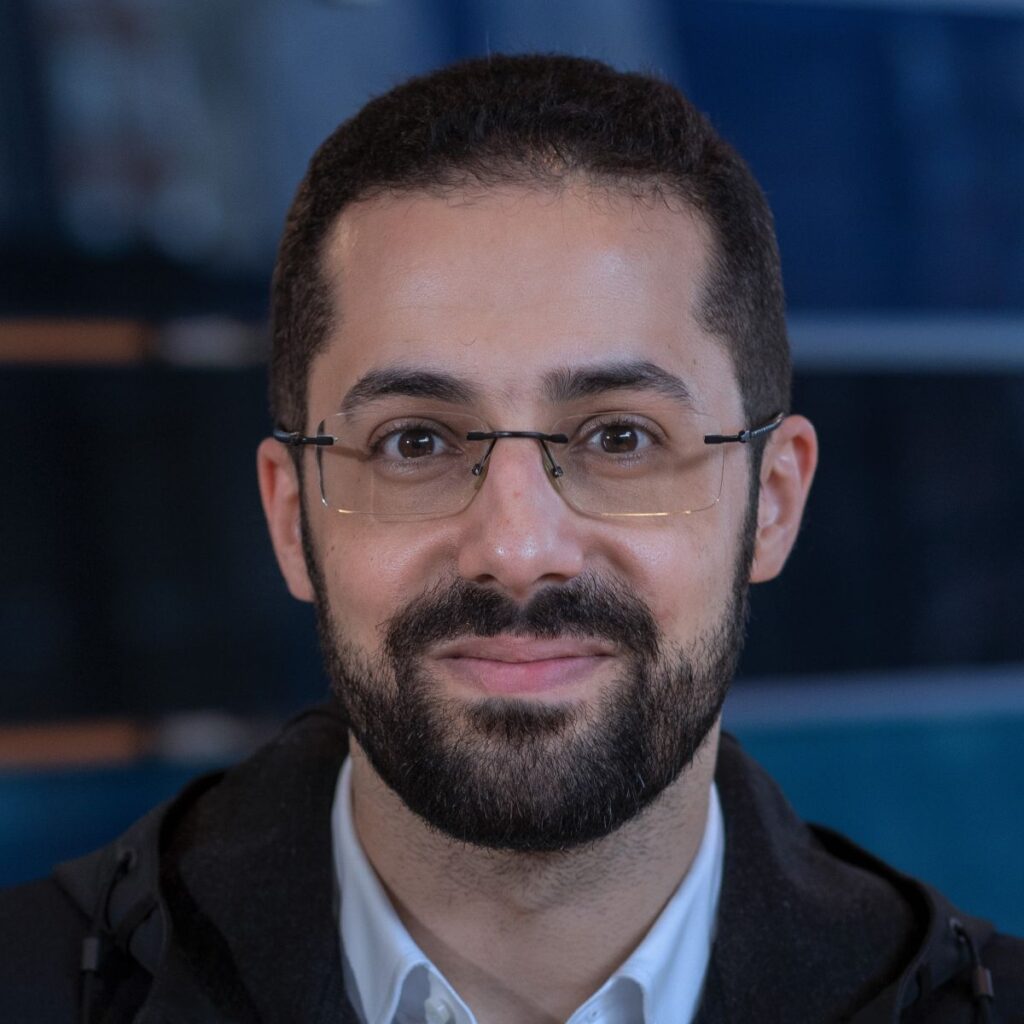
Dr. Akram Hamed
Work done at the University of Toronto
Article citation
Akram A. Hamed, Kui Hua, Quang M. Trinh, Benjamin D. Simons, John C. Marioni, Lincoln D. Stein, Peter B. Dirks. Gliomagenesis mimics an injury response orchestrated by neural crest-like cells. Nature 638, 499-509, doi:10.1038/s41586-024-08356-2 (2025).
Formation of brain tumours mimics the brain wound healing process
Glioblastoma is the most common and most aggressive malignant primary brain tumour. The treatment options remain limited and insufficient. Importantly, it is unclear how these tumours initiate and progress, which makes it difficult to develop effective therapeutic strategies to counteract tumour growth. New research by Akram Hamed provides a detailed map of the entire process of glioblastoma formation and reveals that tumour initiation mimics a brain injury response. Hamed performed this study in Peter Dirks’ laboratory at the University of Toronto. The results of this study raise the prospect of finding specific biomarkers to identify these tumours early on and of developing potential intervention strategies that target injury-response programmes.
In this study, Akram Hamed and colleagues aimed to explore the early (pre-symptomatic) stages in glioblastoma formation. To do this, they generated genetically engineered tumour mouse models that faithfully recapitulate human tumours. They combined this with magnetic resonance imaging to initiate and follow tumour formation in the mice and then used single-cell sequencing technologies to generate a map of glioblastoma formation at single cell resolution. Their data revealed a malignant cell state, they named it neural crest cell-like (NCC-like), that is highly enriched during the early stages of tumour formation. By analyzing the genetic alterations and lineage trajectories, they identified a hierarchy governing tumour formation in which these NCC-like cells exist at a high abundance near the apex and have the potential to give rise to the other malignant cellular states. Moreover, they found that adult brain injury results in the acquisition of a similar, but transient, NCC-like state, suggesting that the process of tumour initiation could be mimicking a brain injury response. Indeed, they identified an abundance of several populations of injury-associated immune cells across all stages of tumour formation. Their experiments revealed that genetic alterations activate an injury-like microenvironment that induces the acquisition of NCC-like states capable of generating highly proliferating malignant cell states that eventually constitute the late-stage tumours. In other words, the formation of brain tumours mimics the brain wound healing process.
This study offers the first detailed map of glioblastoma development. It reveals a new perspective on the genesis of these tumours by identifying the activation of neural crest-like states and injury-like response programmes during tumour initiation. This introduces new ideas for early diagnosis and potential intervention strategies. Specific biomarkers that identify these injury-like response programs could serve as a tool to detect the tumour development process at an early stage. Further, intervention strategies that target injury-response programmes or the NCC-like state could help in inhibiting tumour growth.
About Akram Hamed
Dr. Akram Hamed earned his PhD in Molecular Genetics from the University of Toronto. This study was a core component of his PhD work. Dr. Hamed conceived and designed the study, performed the experiments, generated and analyzed the data, and wrote the manuscript.
Dr. Hamed is currently a Postdoctoral Fellow at Stanford University. He continues to study glioblastomas as he aims to further understand how these malignancies reach the incurable stage and design new strategies to intercept this process. He also studies normal brain development and tissue regeneration/injury, focusing on the links between these processes and the development of brain cancers.
Sources of funding
This study was funded by the Canadian Institute of Health Research (CIHR), the Ontario Trillium Scholarship (OTS) program, University of Toronto, Government of Ontario and SickKids research institute.