Month: July 2025
-

Read CAN’s brief submitted to the 2025 FINA Pre-budget consultations
We are happy to share with you CAN’s pre-budget brief submission for the Consultations launched by the Finance committee of the House of Commons. https://can-acn.org/wp-content/uploads/2025/07/CAN-FINA-Submission-July-2025_final-1.pdf Our two main recommendations are an effective doubling of tri-agency budget over the coming years, and increased investment in brain-related programs. We believe if multiple organizations submit similar recommendations, including the…
-

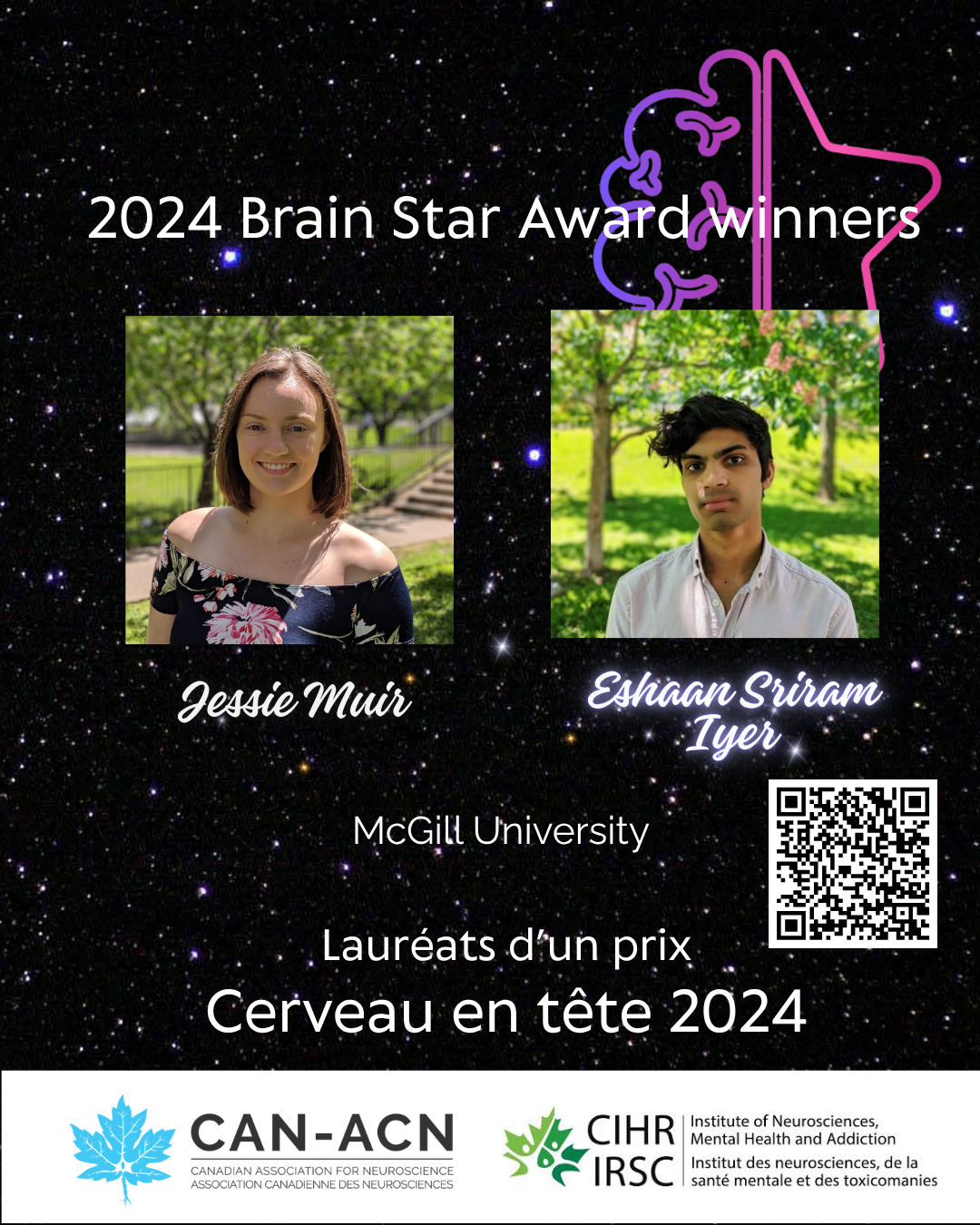
Brain Star Award Feature: Jessie Muir and Eshaan Sriram Iyer, McGill University
Discovery of differences in encoding threat discrimination in the brain of males and females Learning to predict threat is essential, but equally important—yet often overlooked—is learning about the absence of threat. This study by Drs. Jessie Muir and Eshaan Sriram Iyer, working in the laboratory of Dr. Rosemary Bagot at McGill University, looks at mechanisms…
-
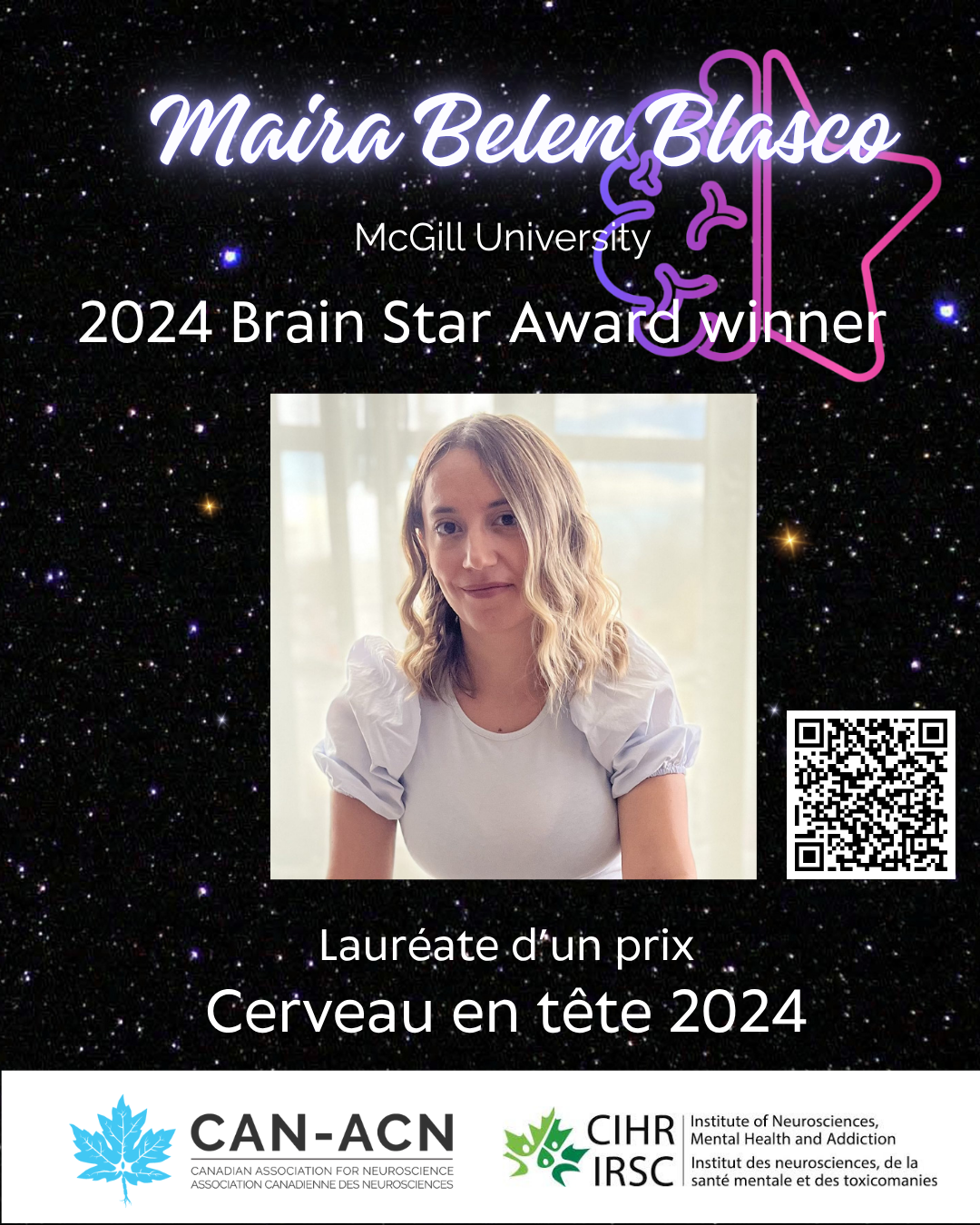
Brain Star Award Feature: Maira Belen Blasco, Douglas Research Institute, McGill University
A reduction in the number of connexions between brain cells is seen in the early stages of psychosis and is associated with negative symptoms. Schizophrenia is a complex psychiatric disorder typically emerging in adolescence or early adulthood. It is thought to occur because of alteration in the maturation or pruning of connexions between neurons called…
-
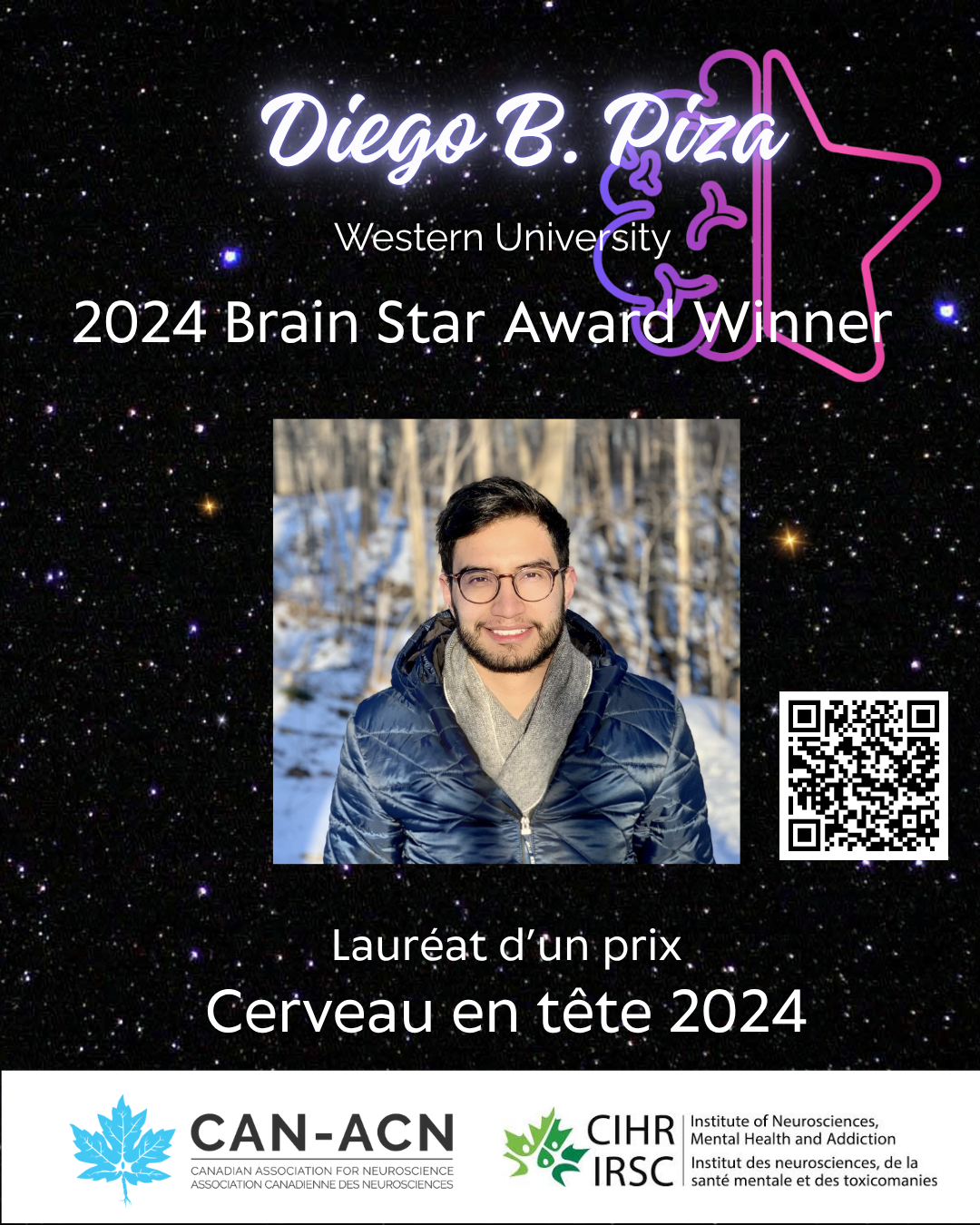
Brain Star Award winner feature: Diego B. Piza, Western University
Better understanding the role of vision in the brain’s representation of space by studying freely moving primates The hippocampus is a structure of the mammalian brain that has been implicated in spatial memory and navigation. Its role has been primarily studied in nocturnal mammals, such as rats, that lack many adaptations for daylight vision. Here,…
-
Postdoctoral Position – Gut Microbiome-Brain Axis in Amyotrophic Lateral Sclerosis
The Nguyen and Sharkey Labs at the University of Calgary and Hotchkiss Brain Institute are seeking motivated applicants for a postdoctoral position studying the gut microbiome-brain axis in amyotrophic lateral sclerosis (ALS). Projects will involve gut microbiota manipulation and in vivo multiphoton imaging of the brain using animal models of ALS. The desired candidate will…
-
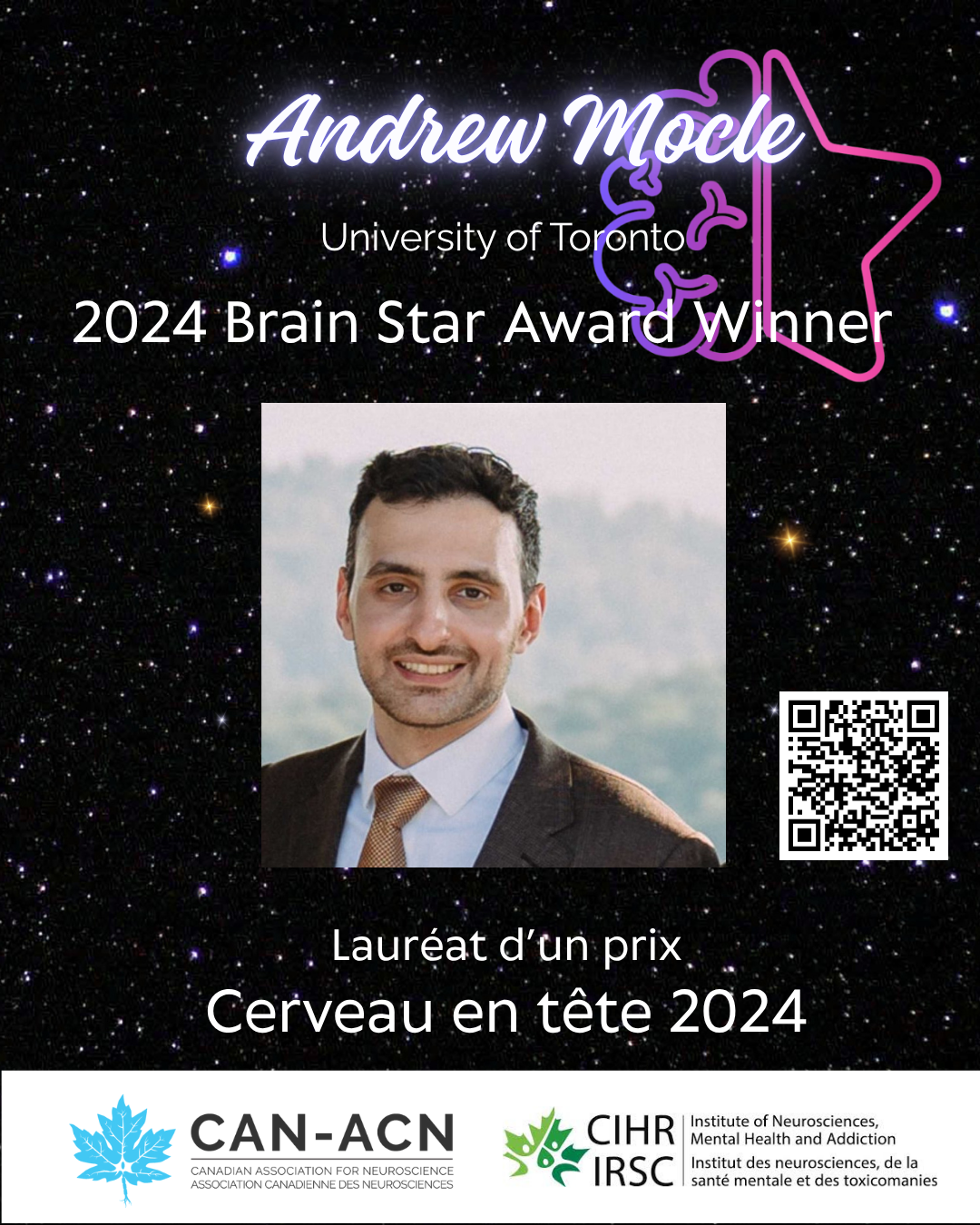
Brain Star Award Feature: Andrew Mocle, University of Toronto
Better understanding how ensembles of neurons are recruited in memory formation. The hippocampus is a critical brain region for encoding and recall of episodic memories. The physical trace left in the brain by memory formation is called an ‘engram’, and the process by which new engrams are formed is still unclear. In this work, Andrew…
-
Brain Star Award Feature: Niklas Brake, McGill University
Better understanding the non-rhythmic components of Electroencephalography (EEG) can lead to better interpretation of brain activity Article citation Brake, N., Duc, F., Rokos, A., Arseneau, F., Shahiri, S., Khadra, A., and Plourde, G. (2024) A neurophysiological basis for aperiodic EEG and the background spectral trend. Nature Communications 15(1514). https://www.nature.com/articles/s41467-024-45922-8 Electroencephalography (EEG) has been in use…
-
Remembering Leo P. Renaud
It is with great sadness that we learned of the passing of Dr. Leo P. Renaud (1941-2025), distinguished Canadian neuroscientist and Past President of the Canadian Association for Neuroscience on 6th July, 2025. Leo had an iconic status in the field of Neuroendocrinology and indeed Canadian Neuroscience that was founded on his outstanding scientific contributions…